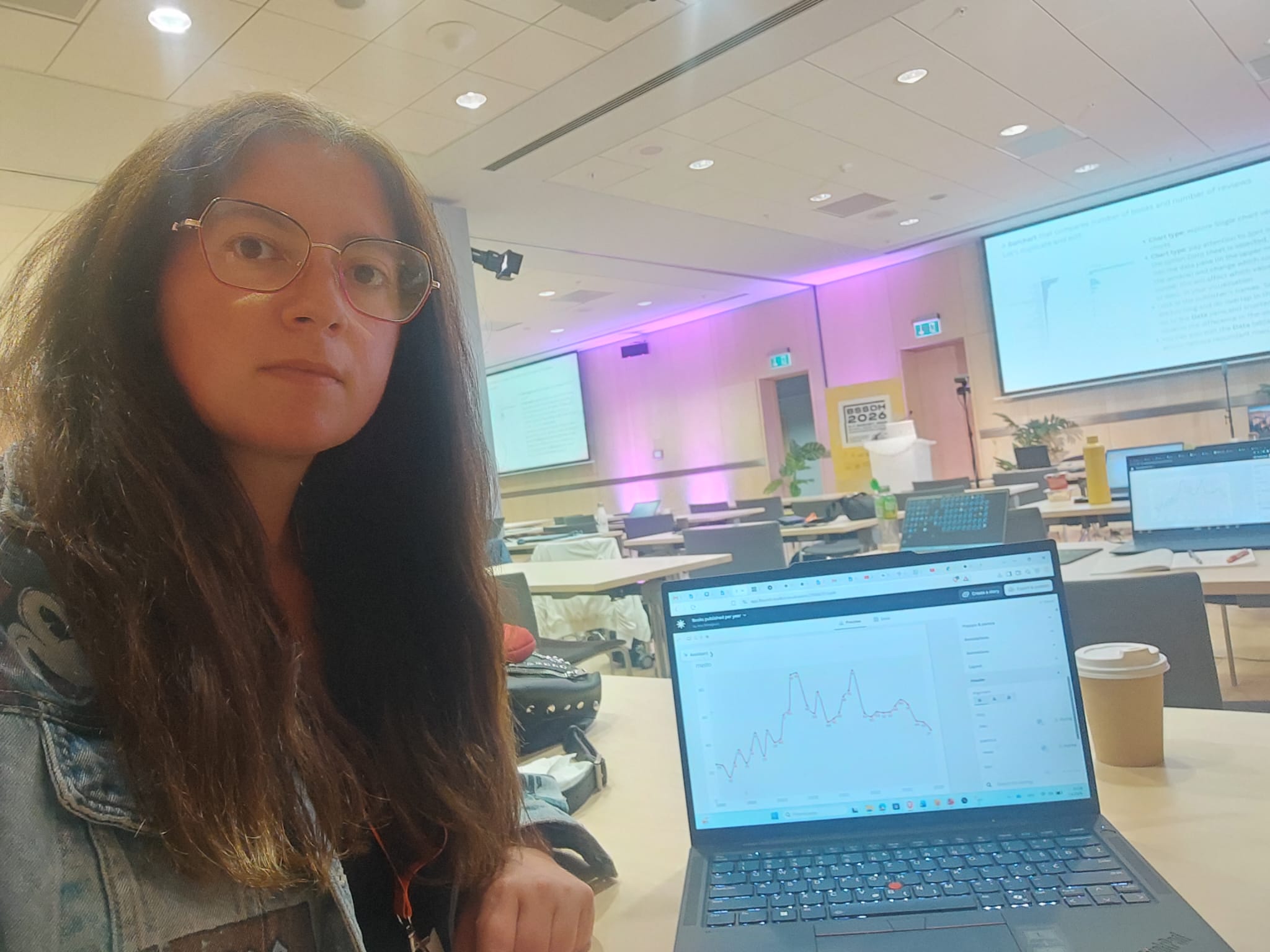
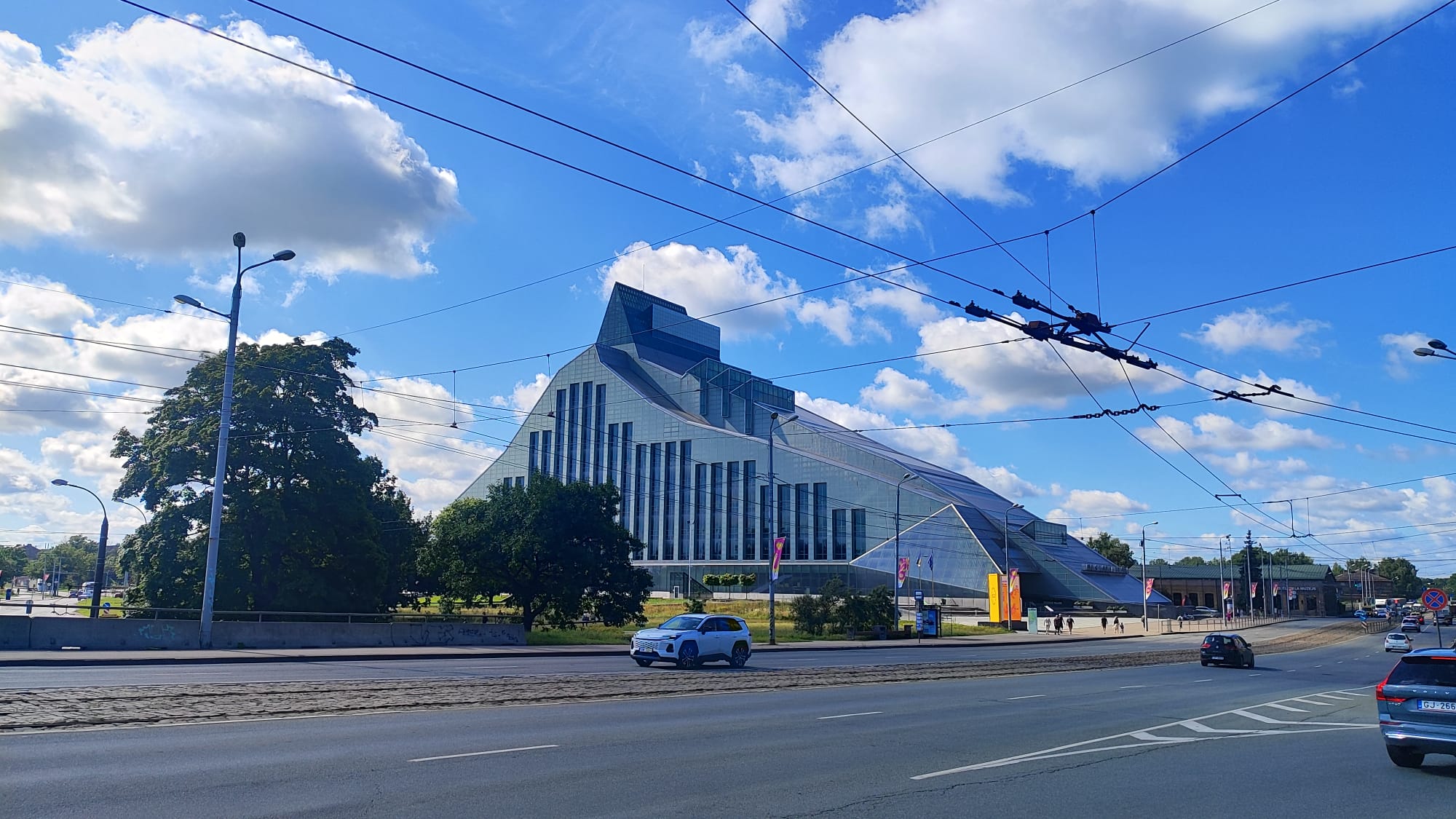
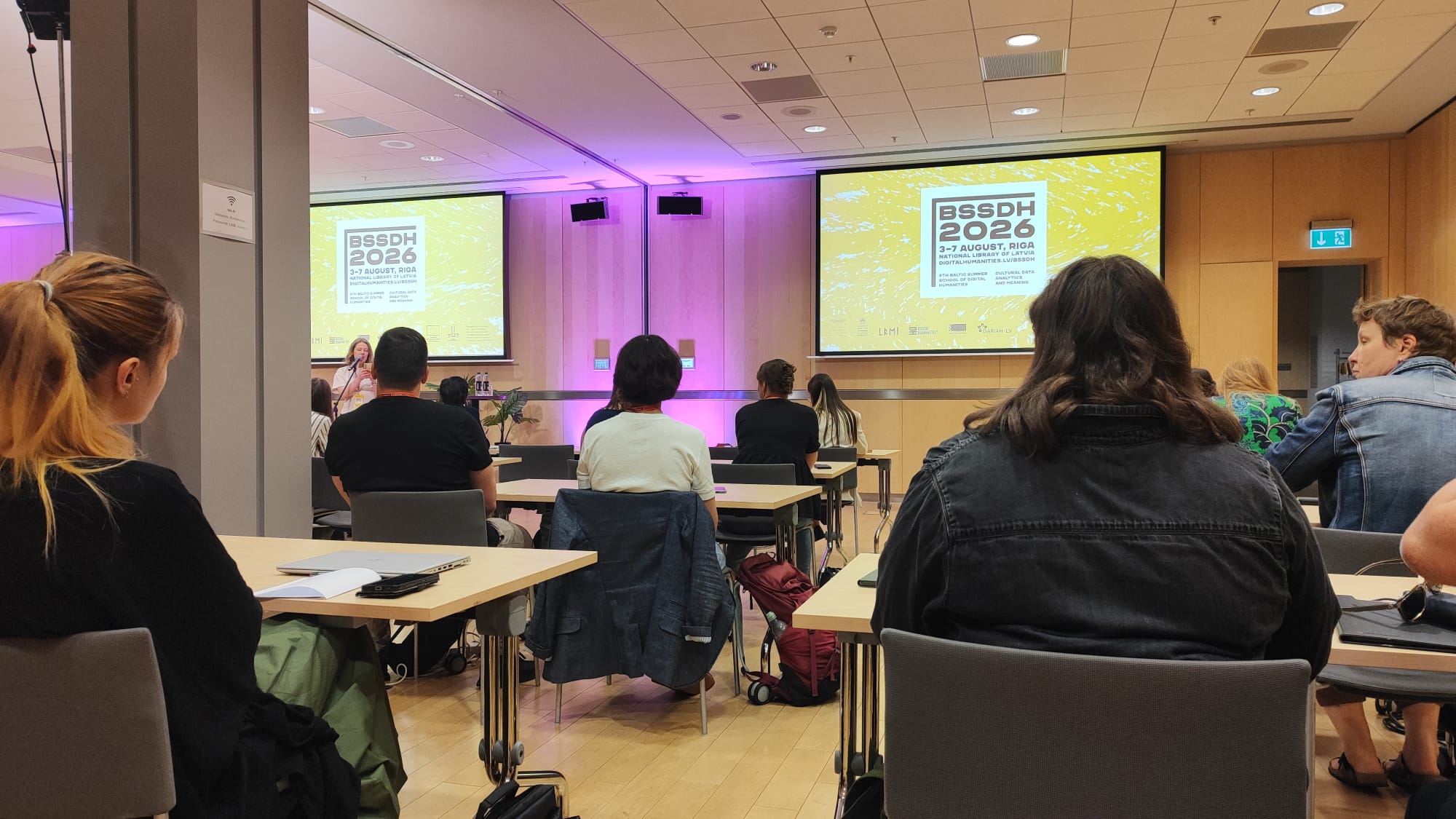
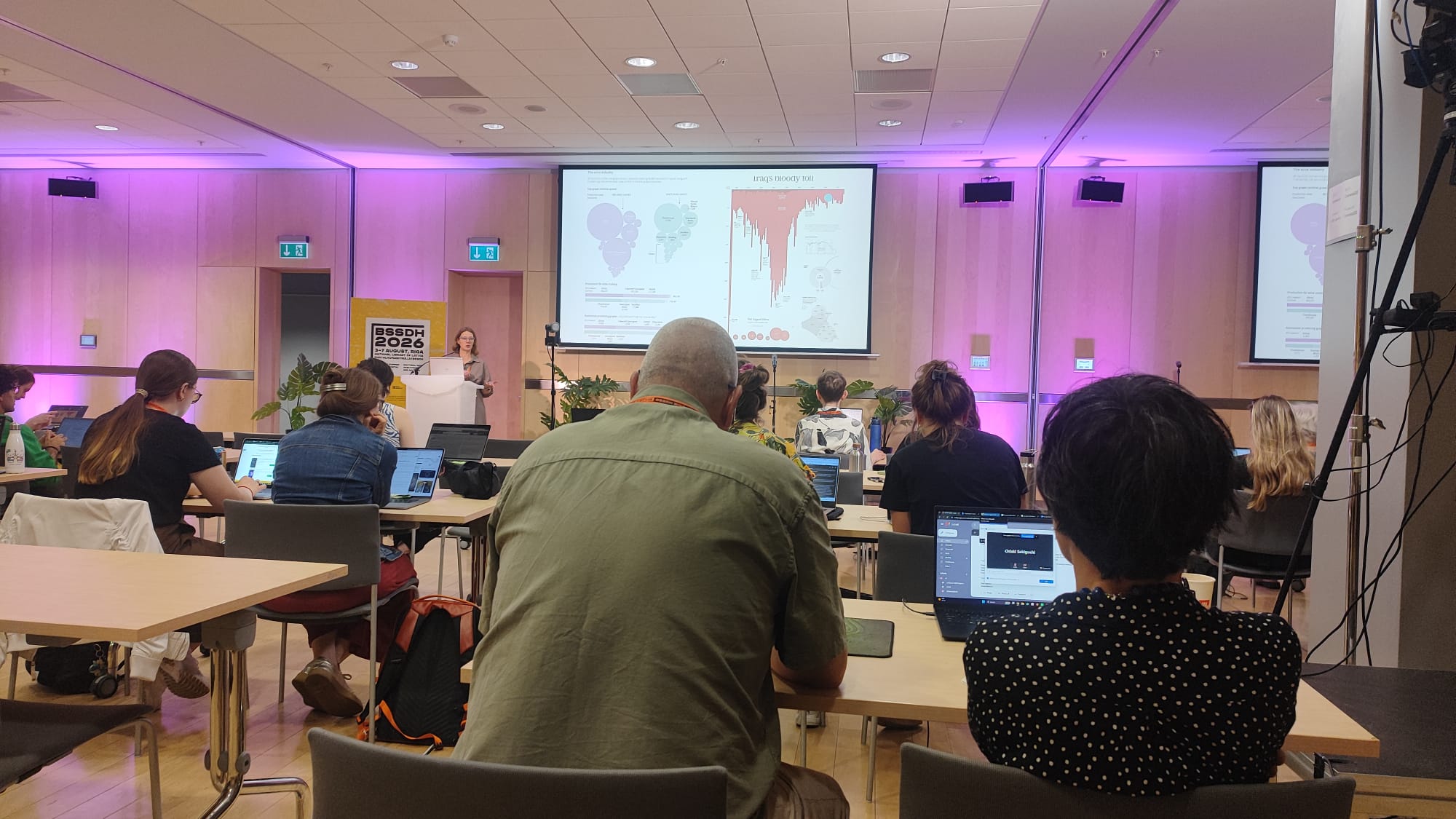
Project FEMIGLA researcher Dr. Ana Mihaljević participated in the Baltic Summer School of Digital Humanities 2026 (BSSDH 2026) which was held from 3 to 7 August 2026 in Riga (Latvia). This international summer school, dedicated to methods and tools in digital humanities, brought together researchers and professionals from a wide range of disciplines with the aim of developing practical skills in data analysis, artificial intelligence, and digital research methods.
During the summer school, she attended the workshops LLM through APIs, OpenRefine and Orange, Gephi, and Flourish. The workshop on the use of large language models through APIs provided practical insight into integrating generative artificial intelligence into research workflows, including the automation of text processing and the development of LLM-based research workflows. The OpenRefine and Orange workshop introduced methods for data cleaning, structuring, and analysis, as well as the basics of visual programming for analytical tasks. The Gephi workshop focused on network analysis and visualisation, while the Flourish workshop provided practical training in creating interactive visualisations for presenting research results to both academic and wider audiences. All workshops emphasised hands-on learning, allowing participants to explore the application of contemporary digital tools in humanities research through practical examples and exercises.
The knowledge and skills acquired are directly relevant to the objectives of the FEMIGLA project, as they support the application of innovative digital methods to the study of the Glagolitic heritage. In particular, the training strengthened expertise in the use of large language models, data processing and structuring, network analysis, and contemporary approaches to research visualisation. These skills will be applied in the project’s future activities, especially in the processing and analysis of textual data, the study of networks of relationships between people and texts, and the development of modern approaches to presenting research results.
Participation in the summer school also fostered the exchange of experiences with researchers from different countries and provided valuable insight into current developments and emerging trends in the field of digital humanities.